
Pickleball Recovery Tips: The Role of Hot Yoga in Faster Muscle Recovery
That deep, achy soreness that settles into your legs and shoulders a day after a long pickleball session is your muscles telling you something specific happened, not just a sign you played hard. Understanding what is actually going on in the muscle tissue changes how you think about recovery entirely, shifting the question from simply waiting it out to actively supporting the process.
Hot yoga for muscle recovery works because it addresses that process directly, supporting the actual biological steps your body goes through to repair and rebuild after a demanding match. This article breaks down what is really happening in your muscles after pickleball and exactly how a heated practice supports that recovery process from start to finish.
What Is Actually Happening in Your Muscles After a Match
The soreness that shows up a day or two after intense play, often called delayed-onset muscle soreness, comes from microscopic tears in muscle fibers caused by repeated eccentric movements, like the quick stops and directional changes pickleball demands constantly.
This is a completely normal part of how muscles adapt and get stronger, but the repair process needs the right conditions to happen efficiently. Blood flow, oxygen delivery, and waste removal all play a direct role in how quickly that soreness resolves and how ready your body is for the next match, which is exactly why passive rest alone often leaves soreness lingering longer than necessary.
Why Blood Flow Is the Center of the Recovery Story
Muscle repair depends heavily on circulation. Blood carries oxygen and nutrients to damaged tissue while also clearing away metabolic waste products that build up during intense activity. When circulation is sluggish, the repair process slows, which is part of why soreness can linger longer than it needs to, sometimes stretching into a third or fourth day instead of fading within forty-eight hours.
This is exactly where hot yoga for muscle recovery makes its biggest impact, since heat is one of the most effective, accessible ways to meaningfully increase blood flow to fatigued tissue.
How the Heat Specifically Speeds Up the Process
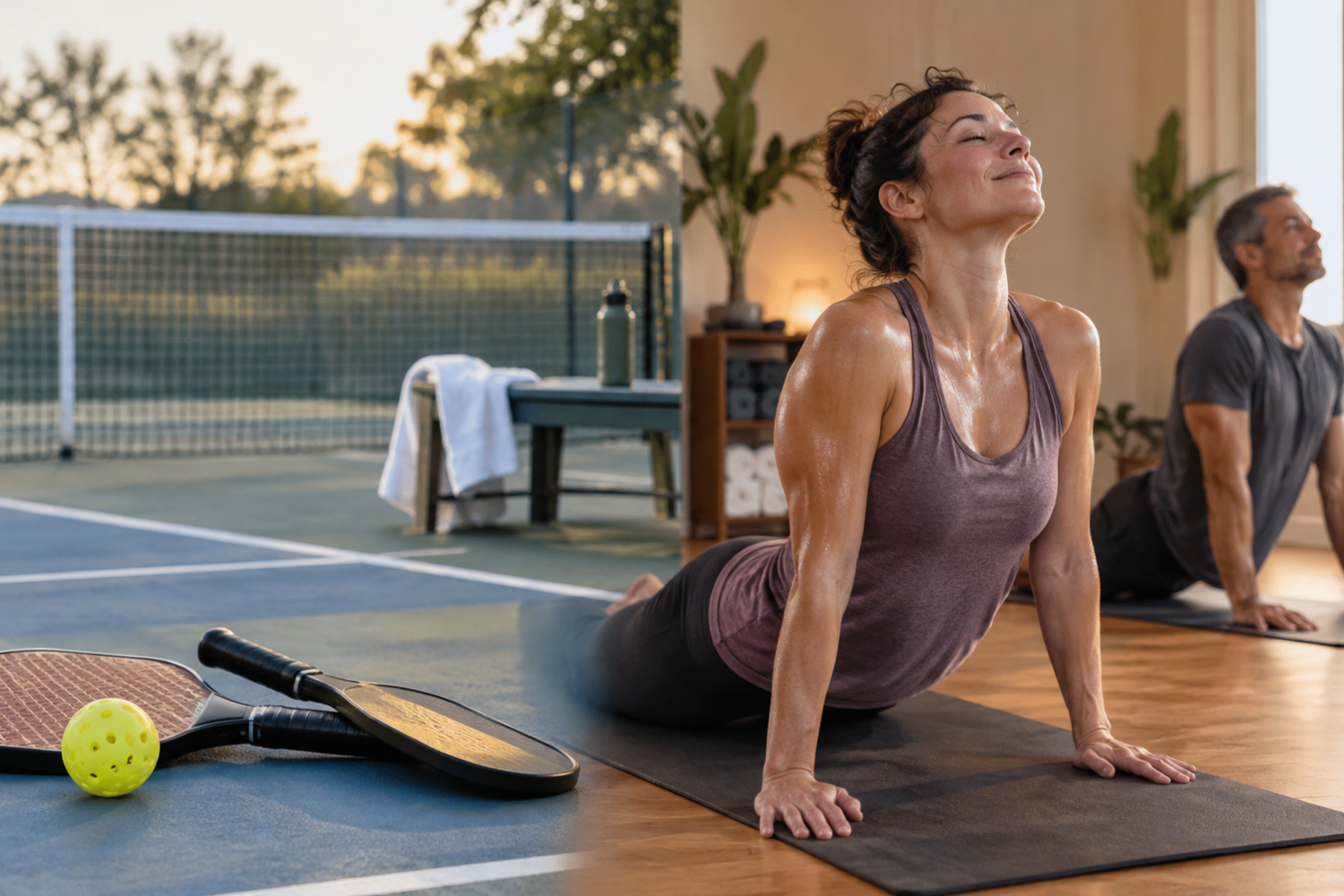
1. Vasodilation Increases Circulation to Damaged Tissue
Heat causes blood vessels to widen, a process called vasodilation, which allows more blood to reach fatigued and damaged muscle fibers. That increased circulation delivers the oxygen and nutrients needed for repair more efficiently than at room temperature.
2. Gentle Movement Supports Lymphatic Drainage
Movement through a yoga sequence, even at a gentle pace, helps the lymphatic system clear waste products and reduce the inflammation that contributes to soreness. Unlike complete rest, active movement in a heated room keeps this drainage process working.
3. Deep Stretching Releases Tension Held in Fatigued Muscles
Fatigued muscles often hold tension that restricts full range of motion. The heat loosens connective tissue enough for a genuinely effective stretch, which can help release that tension more thoroughly than stretching cold ever could.
4. Controlled Breathing Calms an Overworked Nervous System
Intense competitive play keeps your nervous system in an activated state well after the match ends. Slow, controlled breathing shifts the body toward a calmer state, which supports the kind of relaxation response that allows recovery processes to work more effectively.
Pointers for Timing Your Recovery Practice
Schedule a recovery-focused session within a day or two after a hard match, when circulation support matters most
Avoid intense, high heat classes immediately after a match if you are already significantly dehydrated, and rehydrate first
Pair a heated recovery session with proper protein intake and sleep, since all three support the same repair process
Use gentler, more restorative formats specifically for recovery days rather than a high-intensity flow class
Track your soreness levels over a few weeks to notice whether your recovery time is genuinely improving with consistency
Building Recovery Into Your Regular Playing Schedule
Many pickleball players find that one or two recovery-focused sessions a week, timed around their heaviest playing days, meaningfully reduces how long soreness lingers between matches. If you want to see which class format best fits your recovery needs, take a look at the full class schedule and choose a session focused on restoration rather than intensity.
Final Thoughts
Soreness after pickleball is not something you simply have to wait out. Hot yoga for muscle recovery supports the actual biological process your body relies on to repair muscle tissue, from improved circulation to reduced tension and a calmer nervous system, addressing the root mechanism rather than just masking the discomfort.
Ready to recover the way your body actually works best? Book a recovery session at True Hot Yoga to bounce back faster between matches.
Frequently Asked Questions
1. How soon after a pickleball match should I do a hot yoga session for recovery?
Many players find the day after a match works well, once initial fatigue has settled but while soreness is still building.
2. Does hot yoga actually reduce muscle soreness, or does it just feel relaxing?
The increased circulation and gentle movement genuinely support the biological repair process, not just a temporary feeling of relaxation.
3. Should I avoid hot yoga if I am extremely sore after a match?
Mild to moderate soreness is generally fine for a gentle, restorative class, but very sharp pain or severe soreness is worth discussing with a professional first.
4. How is hot yoga different from simply resting for muscle recovery?
Rest alone does not actively improve circulation, while a heated practice combines increased blood flow with gentle movement that supports faster tissue repair.
5. How many recovery-focused sessions a week are ideal for a regular pickleball player?
One or two sessions a week, timed around your heaviest playing days, tends to work well for most consistent players.