
How Hot Yoga Can Help Prevent Common Pickleball Injuries
Most pickleball injuries do not happen out of nowhere. They build slowly from small imbalances and tight spots that never get addressed, until one bad step or one hard swing finally causes a real problem. That is exactly why hot yoga for pickleball injury prevention is worth understanding before an injury happens, not after, since the same tightness that limits your game is often the same tightness setting the stage for a strain down the line.
This article walks through the most common injuries pickleball players face across the ankles, knees, back, elbow, and shoulder, and exactly which kind of preparation actually reduces the risk of each one.
Why Prevention Deserves More Attention Than It Gets
Most players only think seriously about injury prevention after they are already dealing with one, which is backward from how the body actually works best. Building mobility, strength, and balance before an injury occurs is far more effective than trying to recover from one after the fact, and it is also considerably less frustrating than sitting out weeks of the sport you enjoy, especially during a busy playing season.
A proactive approach built around hot yoga for pickleball injury prevention addresses the underlying weaknesses and tightness that eventually lead to the most common injuries on the court.
Ankle Sprains From Quick Direction Changes
Pickleball's constant lateral movement and sudden stops put real strain on ankle stability, making sprains one of the more common injuries in the sport. Balance poses that challenge ankle stability, along with calf and ankle mobility work, train the small stabilizer muscles responsible for controlling those quick direction changes. Stronger, more mobile ankles are simply less likely to roll awkwardly during fast paced play.
Knee Strain From Repeated Pivoting
The knees absorb a lot of rotational stress during pickleball, especially during quick pivots at the net. Weak hip and glute muscles often force the knees to compensate for movement they were not designed to control, which is why hip strengthening poses matter just as much for knee health as anything targeting the knee directly. Improved hip stability takes pressure off the knee joint during those repeated pivoting motions.
Lower Back Strain From Rotational Swings
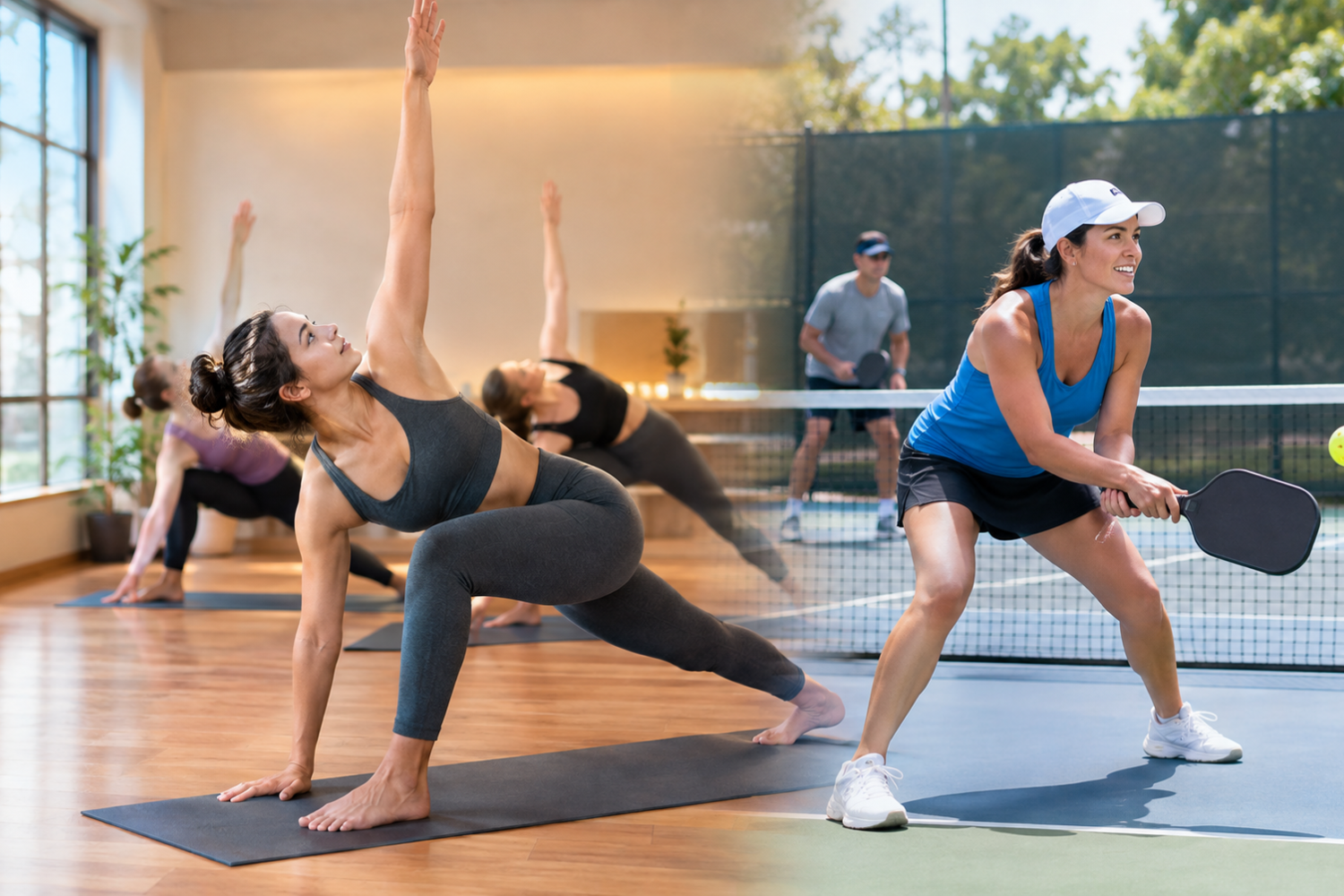
The dinking, driving, and volleying motions in pickleball all involve some degree of spinal rotation, and a lower back that ends up absorbing more of that rotation than it should is a common source of strain. Hip openers and spinal twists help distribute that rotational load more evenly across the hips and thoracic spine, reducing the extent to which the lower back has to compensate.
Elbow and Forearm Strain From Repetitive Shots
The quick, repetitive wrist and forearm movements behind dinking and volleying are a common source of the tendon irritation known as pickleball elbow. Forearm stretches and gentle wrist mobility work, especially when practiced in a heated room, help keep that connective tissue flexible enough to handle the repetitive demand without building up excess strain.
Shoulder Strain From Serves and Overheads
Repetitive overhead motion during serves and overhead shots can gradually tighten the rotator cuff and surrounding muscles, setting the stage for impingement or strain. Shoulder-opening poses that target this area help maintain the range of motion needed for smooth, strain-free overhead movement.
Pointers for Building an Injury Prevention Routine
Focus on hip mobility and strength first, since it supports both knee stability and lower back health at the same time
Add ankle and balance-specific work if you have a history of rolling an ankle or feel unstable during quick direction changes
Do not skip shoulder and forearm work simply because those areas feel fine right now, since prevention matters most before symptoms appear
Practice in a heated room specifically for the deeper, safer stretch that connective tissue needs to actually loosen
Stay consistent year-round rather than only focusing on prevention during a specific season or before a tournament
Building a Weekly Prevention-Focused Practice
Most players find that one to two sessions a week, covering hips, ankles, shoulders, and core together, meaningfully reduces their risk of the most common pickleball injuries over a season. If you want to see which class format covers the most ground, take a look at the full class schedule and build a routine that fits your playing frequency.
Final Thoughts
Preventing an injury is almost always easier than recovering from one, and hot yoga for pickleball injury prevention gives players a genuine way to address the ankle, knee, back, elbow, and shoulder vulnerabilities before they turn into a real problem that sidelines you for weeks.
Ready to build a body that can keep up with how often you want to play? Start a prevention focused practice at True Hot Yoga and give your game a foundation built to last the whole season.
Frequently Asked Questions
1. Which pickleball injury does hot yoga help prevent the most effectively?
Hip and shoulder-related issues tend to respond especially well, since mobility work in those areas addresses the root cause behind several common injuries.
2. How long before a prevention focused practice actually reduces injury risk?
Meaningful improvements in mobility and stability typically build over several weeks of consistent practice, though some benefits show up sooner.
3. Can hot yoga prevent injuries I have never actually had before?
Yes, prevention focused practice addresses underlying tightness and weakness regardless of whether you have experienced a specific injury yet.
4. Should I focus prevention work on my dominant side or my whole body?
A whole-body approach works best, since imbalances between sides can themselves contribute to injury risk over time.
5. Is hot yoga enough on its own, or should I combine it with other prevention strategies?
Hot yoga addresses mobility and strength well, but pairing it with proper warm-ups and suitable equipment provides the most comprehensive preventive approach.