
The Best Hot Yoga Poses for Golfers, and Where to Learn Them
Searching for a list of stretches online, only to try them at home with questionable form, is a familiar starting point for many golfers looking to move better. There is a smarter way to go about it. The right hot yoga poses for golfers can genuinely improve rotation, ease tightness, and support a smoother swing, but only when learned with proper guidance rather than guessed at from an online photo.
This article walks through the specific poses that matter most for golfers and explains why learning them in person makes such a meaningful difference in how effective and safe they actually are.
Why Proper Form Matters More With These Poses Than People Expect
A pose that looks simple in a photo can be surprisingly easy to do incorrectly, and for golfers specifically, that matters because these poses target the exact areas already under strain from the swing: the hips, lower back, and shoulders. Doing a deep hip opener with poor alignment can aggravate the same tightness it was meant to relieve.
This is not meant to scare anyone away from trying, just to explain why learning these poses properly, with an instructor watching your form, produces far better and safer results than following along with a video alone.
Pigeon Pose for Hip Rotation
This deep hip opener targets the external rotators and glutes, areas that directly affect how freely your hips can turn during your backswing and downswing.
Because it asks a lot of the hip joint, proper alignment matters here, and an instructor can adjust your positioning to target the right muscles without straining the knee.
Low Lunge for Hip Flexor Length
Tight hip flexors from both golf and sitting during the day limit how well you can rotate through your swing. This pose lengthens the front of the hip while building stability through the standing leg, and small adjustments to foot placement and pelvic position can make a real difference in how effective the stretch is.
Seated Spinal Twist for Thoracic Rotation
Encouraging rotation to happen through the mid-back rather than concentrating in the lower back is one of the most valuable things a golfer can train.
This twist targets that area, though the temptation to force a deeper twist than your spine is ready for is exactly where guided instruction helps.
Thread the Needle for Shoulder Release
This gentle shoulder opener targets the rotator cuff and upper back, areas that restrict a full backswing when tight. It looks simple, but proper shoulder and neck positioning changes how effectively it releases tension, which is easy to miss without someone watching your form.
Downward-Facing Dog for Full Body Mobility
This foundational pose stretches the hamstrings, calves, and shoulders while building upper-body strength. Alignment through the wrists, shoulders, and spine matters here, particularly for golfers managing any existing wrist or shoulder sensitivity.
Extended Triangle Pose for Side Body and Hamstring Length
This standing pose stretches the hamstrings and side body while training rotational stability, both of which carry over into a more mobile, controlled swing. Getting the alignment right through the front knee and hips takes some coaching to feel it correctly the first several times.
Chair Pose for Core and Leg Endurance
This pose builds the core and leg strength that supports stability throughout your swing and helps you stay steady through a full round of walking. Proper knee tracking and weight distribution are easy to get wrong without feedback, which can shift strain toward the knees rather than the targeted muscles.
Why Learning These Poses in Person Makes Such a Difference
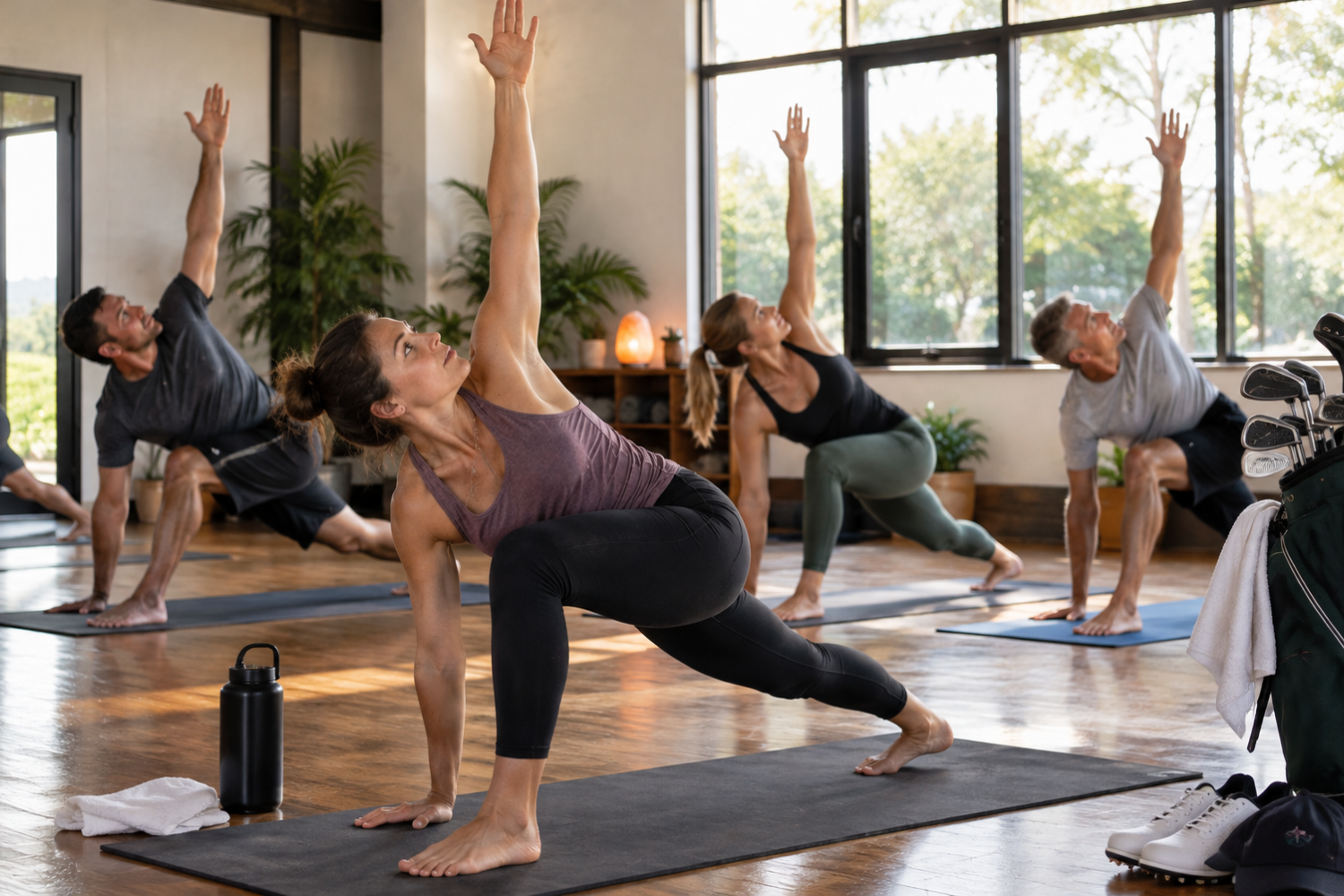
An Instructor Catches What a Mirror or Video Cannot
Small misalignments in these poses are often invisible to the person doing them, especially early on. An instructor watching from the side can spot issues instantly and offer a quick correction before a habit forms.
Modifications Keep the Poses Safe for Your Specific Body
Golfers dealing with an old injury or particular tightness benefit from modifications tailored to their situation, something no generic video or article can offer.
The Heat Changes How These Poses Actually Feel
Several of these poses go noticeably deeper in a properly heated room compared to practicing them cold at home, which is part of why in-person instruction in the right environment matters.
Pointers for Getting Started With These Poses
Learn each pose from an instructor before attempting to deepen it further on your own
Mention any current tightness or old injuries before class so modifications can be offered from the start
Focus on consistency over intensity, since these poses build real change gradually
Pay attention to how each pose feels for your swing, since golfers often notice different areas responding at different rates
Where to Learn Proper Form for These Poses
The most reliable way to learn hot yoga poses for golfers correctly is in a guided class where an instructor can walk you through alignment step by step. Take a look at thefull class schedule and find a session where you can start learning these poses the right way.
Final Thoughts
The right poses can genuinely support a golfer's mobility and swing, but only when they are learned properly rather than pieced together from scattered online sources. Hot yoga poses for golfers deliver real results specifically because of correct form, appropriate modifications, and the right heated environment, all of which come from real instruction.
Ready to learn these poses the right way?Join a class at True Hot Yoga and start building the mobility your swing is asking for.
Frequently Asked Questions
1. Can I learn these poses safely from a video instead of a class?
Videos can introduce you to a pose, but they cannot correct your specific form, which matters a lot for poses targeting areas already strained by golf.
2. Which pose is most important for golfers specifically?
Hip focused poses like pigeon pose and low lunge tend to offer the most direct benefit, since hip mobility plays such a central role in the golf swing.
3. How long does it take to learn proper form for these poses?
Most golfers feel reasonably comfortable within a few classes, though refining alignment is an ongoing process that improves with continued instruction.
4. Are these poses safe for golfers with an existing back or shoulder injury?
In most cases, yes, as long as your instructor is aware of the injury beforehand so they can offer appropriate modifications.
5. Do I need to be flexible already to attempt these poses?
Not at all. Instructors offer modifications for every level, allowing golfers of any starting flexibility to build toward these poses safely.