
What Is Aerial Yoga? Benefits, Techniques, and What to Expect
What Is Aerial Yoga and why are so many people curious about practicing yoga in the air? If you have seen photos of people suspended in colorful hammocks performing anti gravity yoga poses, you might wonder whether it is safe, effective, or just a trend.
The truth is that What Is Aerial Yoga goes far beyond social media visuals. It is a structured yoga practice that blends traditional postures with hammock support to create a unique suspended yoga practice. While it feels playful at first glance, it challenges strength, balance, and focus in ways that surprise many beginners. If you are exploring different yoga styles, you might also enjoy learning about What is Tantric Yoga to understand how yoga branches into many unique paths.
In this guide, we will clearly explain What Is Aerial Yoga, how it works, its benefits, beginner expectations, and how it compares to traditional yoga classes across the USA.
A Simple Explanation of Aerial Yoga

Aerial Yoga
What is aerial yoga in simple terms? It is a yoga practice performed using a fabric hammock suspended from the ceiling. This hammock supports your body weight as you move through poses.
Unlike a mat based session, aerial hammock yoga allows you to partially or fully suspend yourself. The hammock acts as a prop, similar to blocks or straps, but with more dynamic movement possibilities.
Aerial yoga gained mainstream attention through innovators like Christopher Harrison, who developed structured anti gravity training systems. Instructors such as Michelle Dortignac helped bring the practice into traditional yoga studios.
What Is Aerial Yoga at its core? It is still yoga. It incorporates breath awareness, alignment, balance, and controlled transitions. The difference is that gravity becomes part of the experience.
How Hammock Based Yoga Actually Works
To understand What Is Aerial Yoga, it helps to look at how the hammock functions.
The fabric is anchored securely to ceiling mounts designed to hold significant weight. During class, you will:
Place part of your body in the hammock
Lean back for supported inversion yoga
Use the sling for balance assistance
Wrap the fabric around hips or legs for traction
This sling yoga workout challenges stabilizing muscles. Even simple movements activate core and shoulder strength because your body must adjust constantly to maintain balance.
Many students are surprised by how much muscle engagement occurs during aerial hammock yoga. Because the fabric reduces joint compression, some poses feel more accessible than on a mat.
The suspended yoga practice also allows deeper spinal decompression during supported inversions. For students asking whether yoga can support overall conditioning, reading about is hot yoga cardio can offer another perspective on intensity differences across formats.
Top Physical and Mental Benefits of Practicing in the Air
What is aerial yoga good for? Let us address the real benefits.
Physical Activity and Functional strength
The hammock demands core engagement and grip stability. Many movements resemble bodyweight conditioning while maintaining yogic alignment principles.
Improved flexibility
The hammock assists in deeper stretches without forcing range of motion. This can make hip openers and backbends more comfortable.
Spinal decompression
Supported inversion yoga relieves pressure from the spine by using gravity safely.
Balance and coordination
Because the hammock shifts slightly, stabilizing muscles activate constantly.
Mental focus
Suspension requires attention. You cannot rush transitions.
The benefits of aerial yoga extend beyond physical changes. Many students report increased confidence after learning beginner aerial yoga moves that once seemed intimidating.
If your goal includes calorie burn or metabolic support, you may also want to explore whether is hot yoga is good to lose weight to compare energy output across styles.
Beginner Moves You’ll Likely Learn First
When asking What Is Aerial Yoga, beginners often imagine complex flips. In reality, classes start with simple foundational skills.
Common beginner aerial yoga moves include:
Supported downward dog with hammock under hips
Seated balance using the sling
Gentle inversion with feet grounded
Basic backbend supported by fabric
Instructors prioritize safety and alignment. You will not be asked to perform advanced anti gravity yoga poses on your first day.
The early focus includes:
Learning how to enter and exit the hammock
Understanding grip positions
Practicing controlled breathing
What Is Aerial Yoga at the beginner level? It is about building trust with the equipment and your own strength.
Aerial Yoga vs Traditional Yoga Key Differences
Many students ask how Aerial Yoga compares to mat based practice.
Traditional yoga relies on gravity and floor contact for stability. Aerial yoga introduces suspension and instability.
Key differences include:
Use of fabric support versus mat only
Greater access to traction and decompression
Increased core activation for balance
Different sensory experience
In mat yoga, inversions require strong shoulder stability. In aerial hammock yoga, supported inversion yoga allows students to experience upside down positioning more easily.
However, traditional yoga builds grounding and body awareness in a different way. Some students combine both for balanced development.
If you are exploring yoga intensity levels, comparing styles can help clarify what suits your goals.
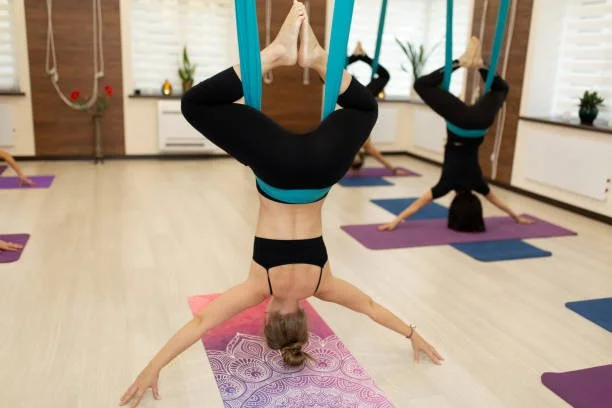
yoga poses
Tips to Prepare for Your First Suspension Class
If you are ready to try aerial hammock yoga, preparation matters.
Wear fitted clothing
Loose shirts can shift during inversions. Choose comfortable but secure athletic wear.
Avoid heavy meals before class
Suspension may feel uncomfortable on a full stomach.
Remove jewelry
Fabric can catch on sharp edges.
Arrive early
Instructors will demonstrate safe entry techniques.
Hydrate properly
Suspended movement still counts as Physical Activity.
Understanding What Is Aerial Yoga before attending reduces anxiety and builds confidence.
It is also helpful to maintain overall conditioning through other yoga sessions. Balanced practice enhances results across formats.
Is Aerial Yoga Safe?
Safety is a common concern when asking What Is Aerial Yoga.
When taught by trained instructors in properly equipped studios, aerial yoga is generally safe. The hammock systems are designed to hold substantial weight loads.
However, individuals with certain medical conditions should consult a healthcare provider first. Pregnancy, glaucoma, or severe spinal injuries may require modifications.
Instructors carefully guide supported inversion yoga transitions to prevent strain.
Like any Yoga Practice, proper instruction and listening to your body are key.
Who Should Try Aerial Yoga?
What Is Aerial Yoga Ideal for?
Students who enjoy variety
People seeking improved flexibility
Those curious about inversions
Individuals wanting playful yet structured movement
You do not need advanced strength to begin. The hammock provides support that makes some movements more accessible than floor based versions.
Aerial yoga blends creativity with discipline. It is structured but feels dynamic.
Conclusion
What Is Aerial Yoga? It is a hammock supported yoga practice that combines traditional poses with suspension to build strength, flexibility, balance, and focus.
While it may look intimidating, beginner classes focus on safe foundational skills. The suspended yoga practice challenges stabilizing muscles, improves spinal mobility, and introduces a new way to experience inversions.
For many students across the USA, aerial yoga offers a refreshing alternative to mat sessions while still honoring core yoga principles.
If you are curious about expanding your Yoga Practice, aerial yoga may be the next step in your movement journey.
Frequent Ask Questions:
1. Is aerial yoga suitable for beginners?
Yes. Beginner classes introduce basic hammock skills and simple supported poses before progressing to advanced movements.
2. Do you need strength to try aerial yoga?
No. The hammock provides assistance. Strength develops gradually through consistent practice.
3. Is aerial yoga safe?
When taught in a certified studio with proper equipment, aerial yoga is generally safe. Always inform your instructor of injuries.
4. What should you wear to an aerial yoga class?
Wear fitted athletic clothing that covers the backs of your knees and underarms to prevent fabric irritation.
5. How is aerial yoga different from aerial fitness?
Aerial yoga focuses on breath control, alignment, and mindful transitions. Aerial fitness may emphasize acrobatics or high intensity conditioning rather than traditional yoga principles.